Fat, oil and grease are really bad for your plumbing and septic system
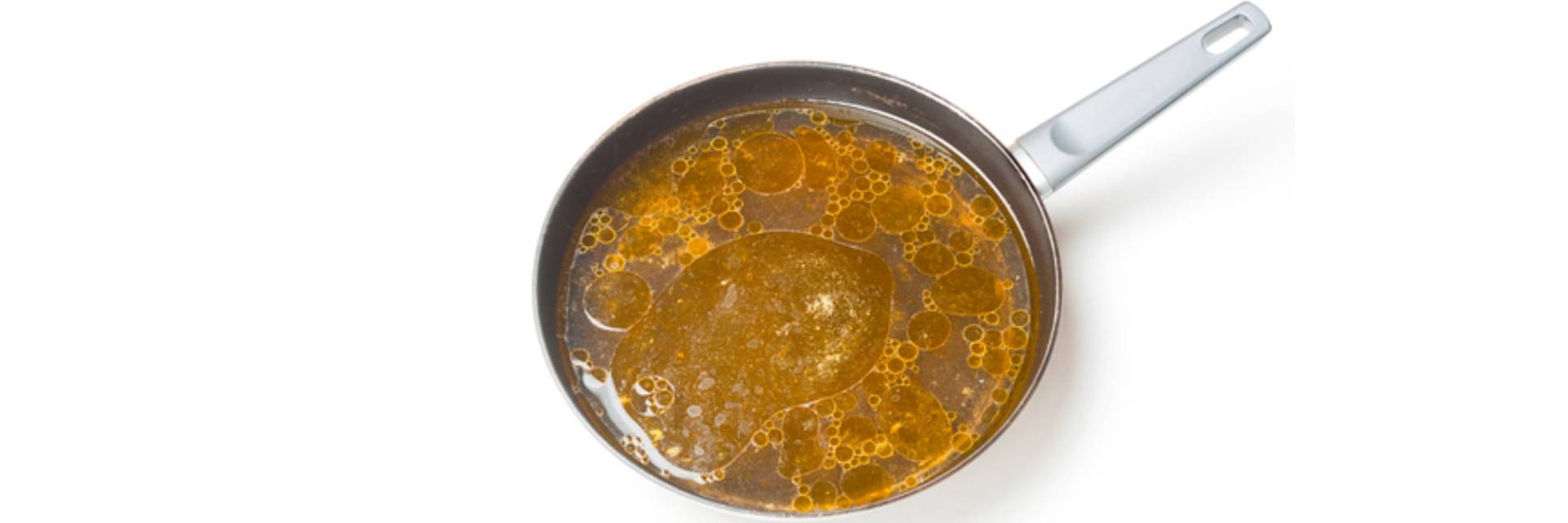
Fats, oils, and grease from cooking products like oil, butter, sauces, and dressings should never be poured down the drain. When FOG accumulates in plumbing, it restricts flow and can cause wastewater backups. In septic systems, grease buildup leads to clogs, overflows, environmental contamination, and increased maintenance costs such as more frequent pumping.
How FOG affects the septic system
Septic systems are designed to break down tissue and waste and nothing else. This is primarily why Fat, Oil, and Grease (FOG) should be kept out of the system. FOGs are usually not broken down by the bacteria in the septic tank but instead float to the top of the tank to form the scum layer. If the scum gets too thick, it will rise to the outlet and start forcing some of the FOG out of the tank. FOG is very harmful to the aerobic stage of effluent treatment which is found in the leach field. It should, therefore, not be allowed to flow from the septic tank and into the drain field.
Scum is also related to the gases that are released into the system because some of the sludge particles may be carried up by the gas bubbles into the scum layer. These particles will only sink back to the sludge if the gas bubbles are released. The presence of airspace encourages vegetative molds to accelerate trapping of the rising sludge particles and this results in a leathery scum layer that is relatively hard to pump out.
The retention time of wastewater in the septic tank is very important. The wastewater needs time in the septic tank so that the suspended solids can settle into the sludge layer while FOG floats in the scum layer. More retention time also gives microbes enough time to breakdown and liquefy the organic waste in the effluent. But when the scum layer is too thick, the retention time of wastewater in the septic tank will be greatly reduced. As a result, wastewater will be forced out of the tank prematurely. This wastewater may end up reaching the soil before it is adequately treated so the pathogens therein could cause contamination.
Measuring the scum depth
Apart from using the recommended septic tank cleaning interval, you should also regularly measure the depth of your scum just to ensure it hasn’t grown too thick. The depth of the scum is actually very important data because it can help you to know how healthy your system is and if it is being pumped as regularly as it needs to. The following rules will help you know when you should schedule the pumping of the tank based on the scum depth measurements.
The one-third rule – the one-third rule can help you to know if your septic tank is due for pumping based on the depth of the scum. You should pump the septic tank whenever the total depth of the scum and sludge layer is equal to one-third of the depth of the entire tank.
Three-inch rule – you should pump the septic tank if you notice that the bottom of the outlet baffle is three inches away from the bottom of the scum layer.
To measure the scum depth, use a 3-inch piece of wood that is attached to a long stick. Push the stick through the scum layer until you feel the liquid beneath it. Move the stick gently through the layer until you sense a change in resistance. This will indicate that you have reached the bottom of the layer. When you arrive at this bottom, mark your measuring stick with a marker at the top of the opening of the septic tank. Use the same stick to locate the bottom of the outlet baffle and make another marking using the same reference point (a good reference point will be the top of the septic tank opening). The distance between the two marks you make should be the distance between the bottom of the scum layer and the bottom of the outlet baffle.
Grease traps
Restaurants produce a lot of grease in their kitchens and this can potentially lead to lots of blockages and other related issues. Tens of thousands of dollars is spent annually by restaurants and other food establishments to deal with plumbing issues that are directly related to FOG. As one of the strategies of curbing this menace, the government requires all restaurants to install grease traps. The grease traps intercept the FOG before as it leaves the kitchen and it is usually installed just below the sink in the kitchen or outside the kitchen. The main types of grease traps include;
In-kitchen passive grease trap
These interceptors collect the grease as it rises to the top of a small baffled tank as wastewater from the kitchen flows through the unit. The grease that is collected from in-kitchen passive grease traps will have to be removed manually. They should, therefore, be cleaned regularly (daily or weekly depending on their size and amount of FOG generated). If they are not cleaned regularly, FOG will accumulate in the traps and it will be forced into the septic tank. However, if they are cleaned and maintained properly, they can remove up to 95% of the FOG.
Pre-cast in-ground concrete grease traps
Pre-cast concrete grease traps work just the same way in-kitchen interceptors do except that they work on a larger scale. The commonest pre-cast in-ground grease traps fall in the 750-2000 gallons range. Because of their size, they can handle more FOG but this also means they are expensive to purchase and install. These grease traps are ideal for large restaurants and they are usually cleaned periodically by grease pumping companies.
Automatic grease trap
The main difference between automatic grease traps and the other two is that they are designed to automatically remove FOG on a predetermined schedule. The automatic cleaning function makes these traps quite efficient. They manage to remove at least 98% of FOG in the wastewater. Because of the feature of automatically removing FOG, they are usually relatively smaller and can, therefore, be easily fitted in the kitchen. However, they still need to be cleaned regularly in order to remove any settled solids.
Conclusion
You should not pour oil and grease in the sink. When doing the dishes, scrape any grease and oil first before you start washing them. Instead of pouring grease and oil down the sink, you can pour cooled leftover fats in a plastic container and store it in the freezer until it is ready for disposal. Once the container is full, put its lid on and dispose of it in the garbage.
AI SEPTIC ANALYSIS
Chat with our AI to diagnose issues, get your questions answered, and receive personalized recommendations for YOUR septic system.
START FREE ANALYSIS